USB vs Wireless Microphones for Meetings (2026): Which One Sounds Professional Without Stress? 🎙️💼
28 December 2025
Confused between USB and wireless microphones for meetings? This 2026 guide compares sound quality, reliability, setup ease, latency, and real-world meeting scenarios to help you choose the right mic for work-from-home and office calls.
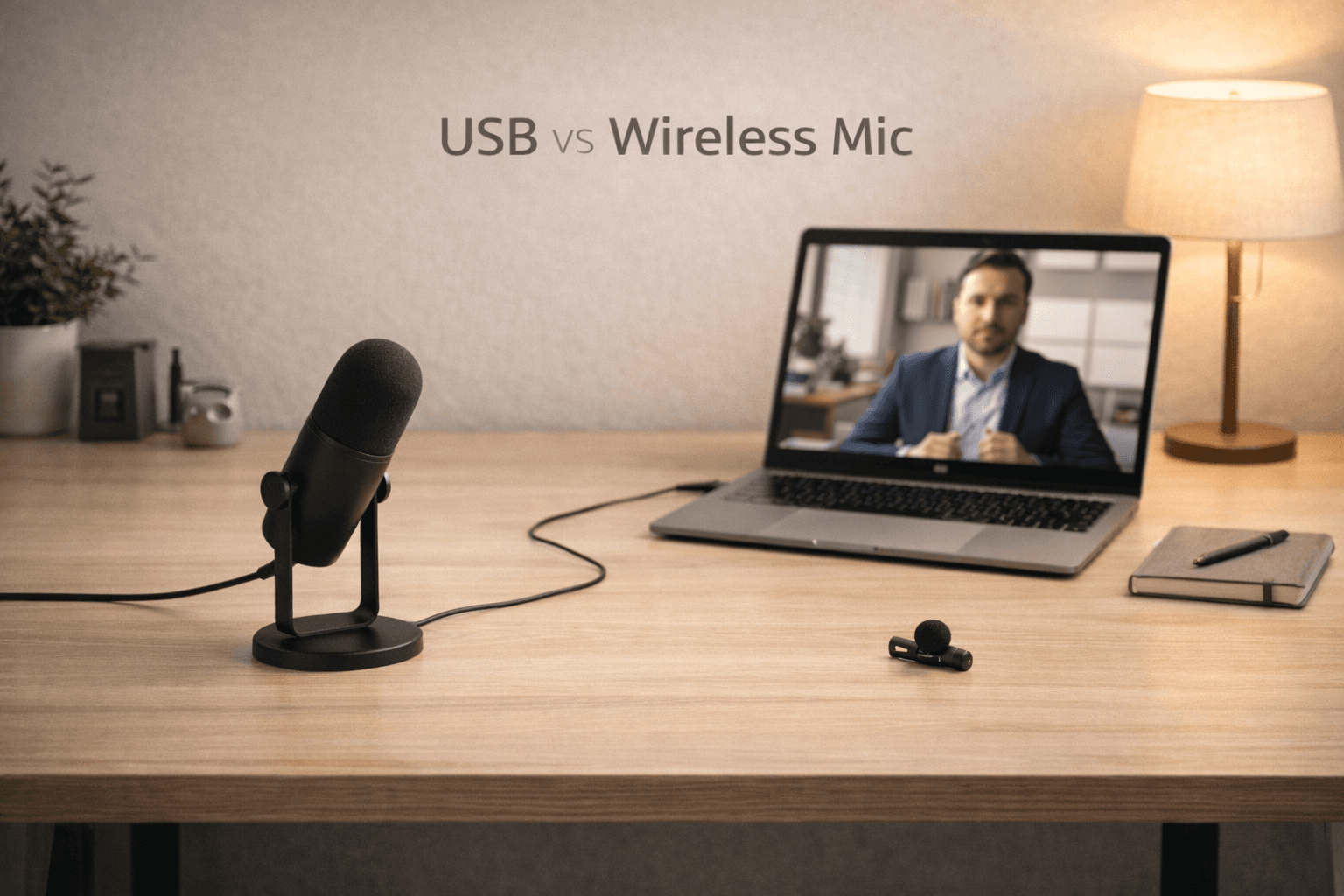
We’ve all been there - the meeting starts, your camera is on, your thoughts are clear… and then someone says, “Your voice is breaking.” Or worse, “We can’t hear you.” In that moment, confidence drops instantly. In 2026, meetings are no longer occasional - they’re daily. Interviews, team calls, client presentations, online classes, and remote work discussions all depend on one thing: how you sound. And yet, microphones are often an afterthought. The big question many people face today is simple but important - should you use a USB microphone or a wireless microphone for meetings? Both promise convenience. Both claim clarity. But they behave very differently in real-world meeting situations. This guide breaks it all down honestly - so your voice never becomes the weak link again.
USB vs Wireless Microphones for Meetings - The Real 2026 Comparison 🎧
- Why Microphone Choice Matters More Than Ever →
In meetings, your voice represents your presence. Poor audio makes you sound distant, unsure, or unprepared - even when you’re not. A clear, stable microphone builds trust instantly. People forgive video glitches. They rarely forgive bad audio. Choosing the right mic isn’t about sounding fancy - it’s about being heard clearly, confidently, and without friction.
- USB Microphones: The Reliability Champions →
USB microphones connect directly to your computer and work instantly. No pairing, no batteries, no signal drops. For meetings, this reliability is powerful. When you plug in a USB mic, you know it will sound the same every single time. That predictability removes anxiety and lets you focus fully on the conversation instead of your tech.
- Wireless Microphones: Freedom and Flexibility →
Wireless microphones offer freedom of movement. You can stand, walk, or adjust your posture without worrying about cables. This feels natural and comfortable, especially during long meetings. However, this freedom comes with new responsibilities - battery levels, wireless interference, and connection stability all enter the equation.
- Sound Quality in Real Meetings (Not Studio Tests) →
In controlled environments, both USB and wireless microphones can sound great. But meetings aren’t controlled. USB microphones maintain consistent sound because the signal travels directly through a cable. Wireless microphones rely on radio signals, which can be affected by distance, walls, Wi-Fi congestion, and interference. In critical meetings, consistency often matters more than theoretical quality.
- Latency and Voice Sync →
USB microphones deliver near-zero latency, meaning your voice reaches the call platform instantly. Wireless microphones introduce small delays - usually unnoticeable, but sometimes enough to cause lip-sync mismatch or echo issues in meetings. While modern wireless tech has improved, USB still wins for absolute timing accuracy.
- Setup Simplicity Under Pressure →
Meetings don’t wait. USB microphones shine because they’re truly plug-and-play. Wireless microphones require pairing, charging, and occasional troubleshooting. When a meeting starts unexpectedly or time is tight, simplicity becomes priceless. Fewer steps mean fewer things that can go wrong.
- Battery Anxiety vs Cable Awareness →
Wireless microphones introduce battery anxiety - the constant background thought of “Is it charged?” USB microphones eliminate that stress entirely. On the other hand, cables can restrict movement and clutter desks. One creates mental pressure, the other creates physical limitation. Which one bothers you more depends on your work style.
- Movement Needs During Meetings →
If you mostly sit at your desk during meetings, USB microphones feel perfectly natural. If you present while standing, teach classes, or move frequently, wireless microphones feel liberating. Understanding how much you actually move during meetings is key to choosing correctly.
- Reliability in High-Stakes Meetings →
Interviews, client pitches, performance reviews - these moments demand reliability. USB microphones reduce risk. No batteries to die mid-sentence. No sudden signal drops. Wireless microphones are improving, but when the stakes are high, most professionals still trust wired connections.
- Desk Cleanliness and Visual Comfort →
A clean desk improves mental clarity. Wireless microphones reduce visible clutter and create a calmer workspace. USB microphones require intentional cable management to achieve the same effect. Visual simplicity may not seem important, but it subtly affects focus and stress levels during long calls.
- Shared Workspaces and Portability →
Wireless microphones travel easily between rooms or locations. USB microphones tend to stay anchored to one desk. If you work from multiple places - home, office, or co-working spaces - wireless setups adapt more easily. Fixed desks favour USB stability.
- Audio Consistency Across Platforms →
Meeting platforms compress audio differently. USB microphones generally handle compression more predictably, delivering a stable voice tone across platforms. Wireless microphones can sound different depending on the connection quality. Consistency builds professional presence.
- Learning Curve and Troubleshooting →
USB microphones require almost no learning curve. Wireless microphones demand awareness - charging routines, pairing habits, signal checks. If you enjoy managing tech, wireless feels fine. If you want tools that disappear into the background, USB is easier.
- Stress, Confidence, and Mental Load →
Every extra technical concern adds mental load. When your mic is reliable, your mind stays on the discussion - not on whether you’ll be heard. Confidence in your audio setup translates directly into clearer communication and stronger presence.
- Hybrid Use: Mixing USB and Wireless →
Many professionals use both. USB microphones for desk-based meetings and critical calls. Wireless microphones for presentations, teaching, or movement-heavy sessions. The smartest setups adapt instead of forcing one solution everywhere.
- Choosing Based on Your Meeting Style →
If your meetings are mostly seated, predictable, and high-stakes, USB microphones are usually the better choice. If your meetings involve movement, flexibility, and informal discussions, wireless microphones make sense. The right choice matches your behaviour, not trends.
- The Emotional Truth Behind the Decision →
USB microphones offer peace of mind. Wireless microphones offer freedom. One calms you. The other energises you. Productivity and communication are emotional experiences - choose the tool that makes you feel confident every time you speak.
FAQs
Final Thoughts 💭
Meetings aren’t just conversations - they’re moments where your ideas, confidence, and professionalism are judged through sound. USB microphones give you stability and peace of mind. Wireless microphones give you freedom and flexibility. Neither is universally better - but one will feel right for the way you work. Choose the microphone that lets you forget about the tech and focus fully on what you’re saying. When your voice is clear, your presence becomes undeniable. 🎙️