Gaming Chair vs Ergonomic Office Chair: Which Should You Buy in 2026? 🪑⚔️
18 December 2025
Confused between a gaming chair and an ergonomic office chair? This 2026 buying guide compares comfort, posture support, health impact, long hours performance, and real-world usage to help you choose the right chair for your setup.
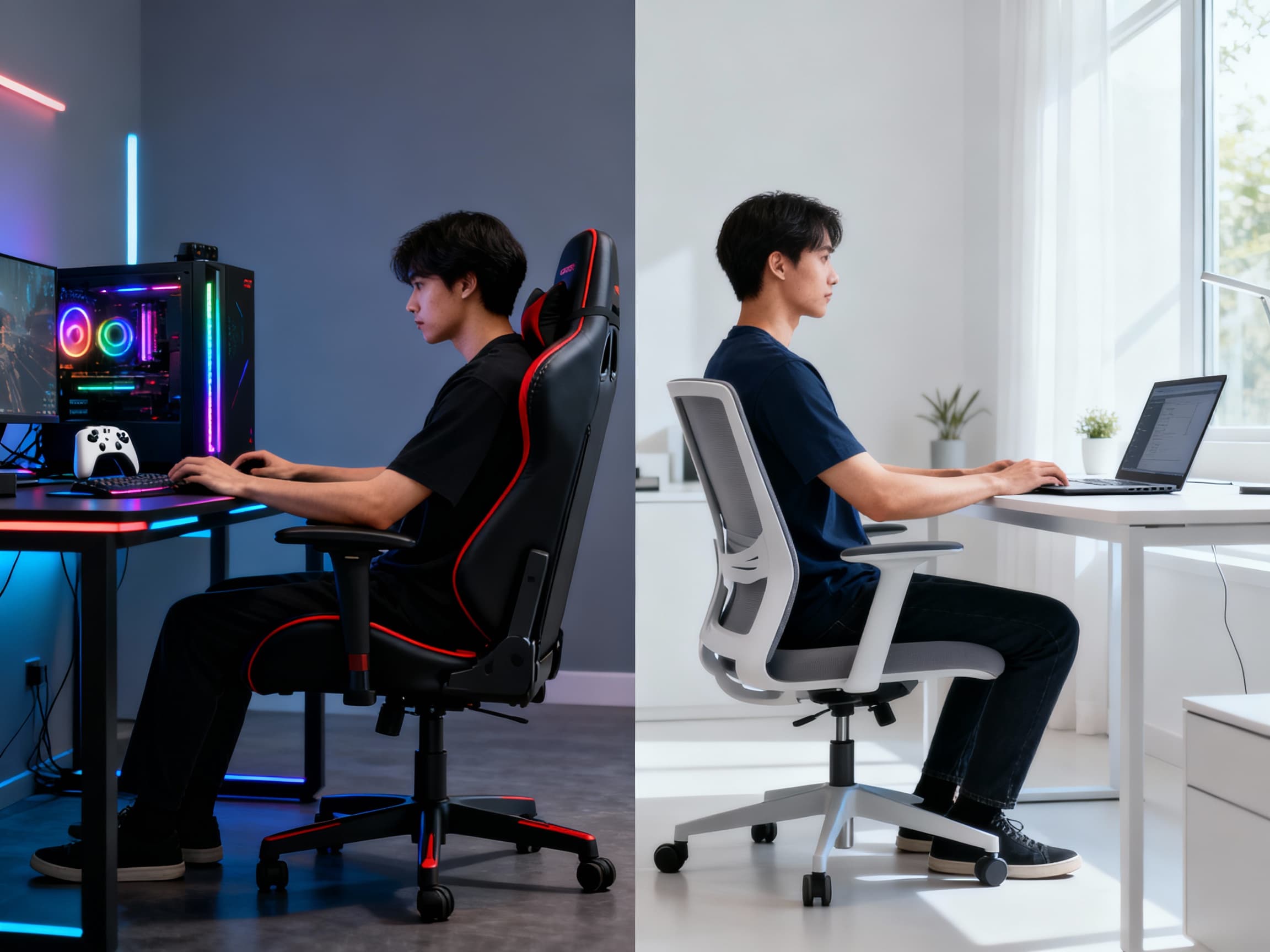
Let’s be honest - the chair you sit on silently decides how your body feels tomorrow. That dull ache in your lower back, the stiff shoulders after a long grind, the restless shifting because nothing feels quite right… it all starts with your chair. We spend more time seated than ever before - gaming, working from home, editing content, studying, streaming, and scrolling. And yet, choosing the right chair still feels confusing. Do you go for the aggressive, race-inspired gaming chair? Or the minimalist, posture-first ergonomic office chair? Both promise comfort. Both claim health benefits. But which one truly protects your body in the long run? This guide breaks the hype and emotions down to real-world truth - so you don’t just buy what looks cool, but what actually supports you for years to come.
Gaming Chair vs Ergonomic Office Chair - The Real Comparison (2026) 🧠
- The Core Design Philosophy: Style vs Science →
Gaming chairs are inspired by racing car bucket seats - tall backs, bold curves, side bolsters, and aggressive colors. They are designed to look powerful and immersive. Ergonomic office chairs, on the other hand, are built on medical research, biomechanics, and posture science. They aim to move with your body, support your spine naturally, and reduce fatigue over long hours. One appeals to emotion and identity. The other is focused purely on long-term health and functionality.
- Posture & Spinal Alignment →
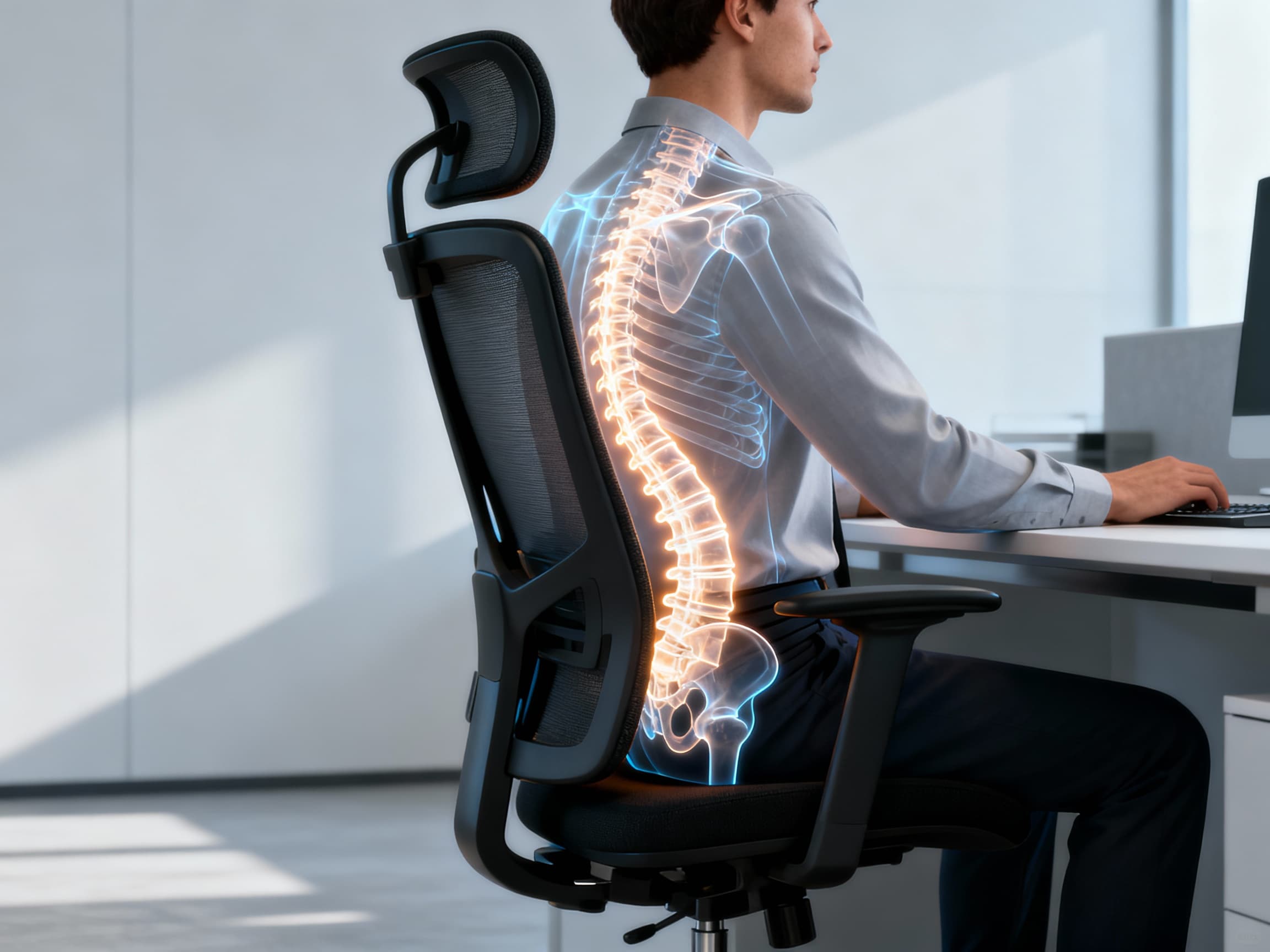
This is where ergonomic chairs dominate. A true ergonomic chair supports the natural S-curve of your spine, especially the lumbar region. It allows micro-movements so your back isn’t locked in one rigid position. Many gaming chairs use removable pillows instead of built-in adjustable lumbar systems. While pillows feel fine initially, they often fail to provide consistent support over time. If long-term spinal health matters to you, ergonomics wins this round clearly.
- Comfort During Long Sessions (4-10 Hours) →
Short-term comfort and long-term comfort are not the same. Gaming chairs often feel plush at first - thick cushioning, padded armrests, and soft upholstery. But after 5-6 hours, pressure builds on the lower back and thighs. Ergonomic chairs distribute your weight more evenly, reduce pressure points, and improve blood circulation. If you regularly sit for long gaming or work sessions, this difference becomes life-changing over time.
- Neck & Shoulder Support →
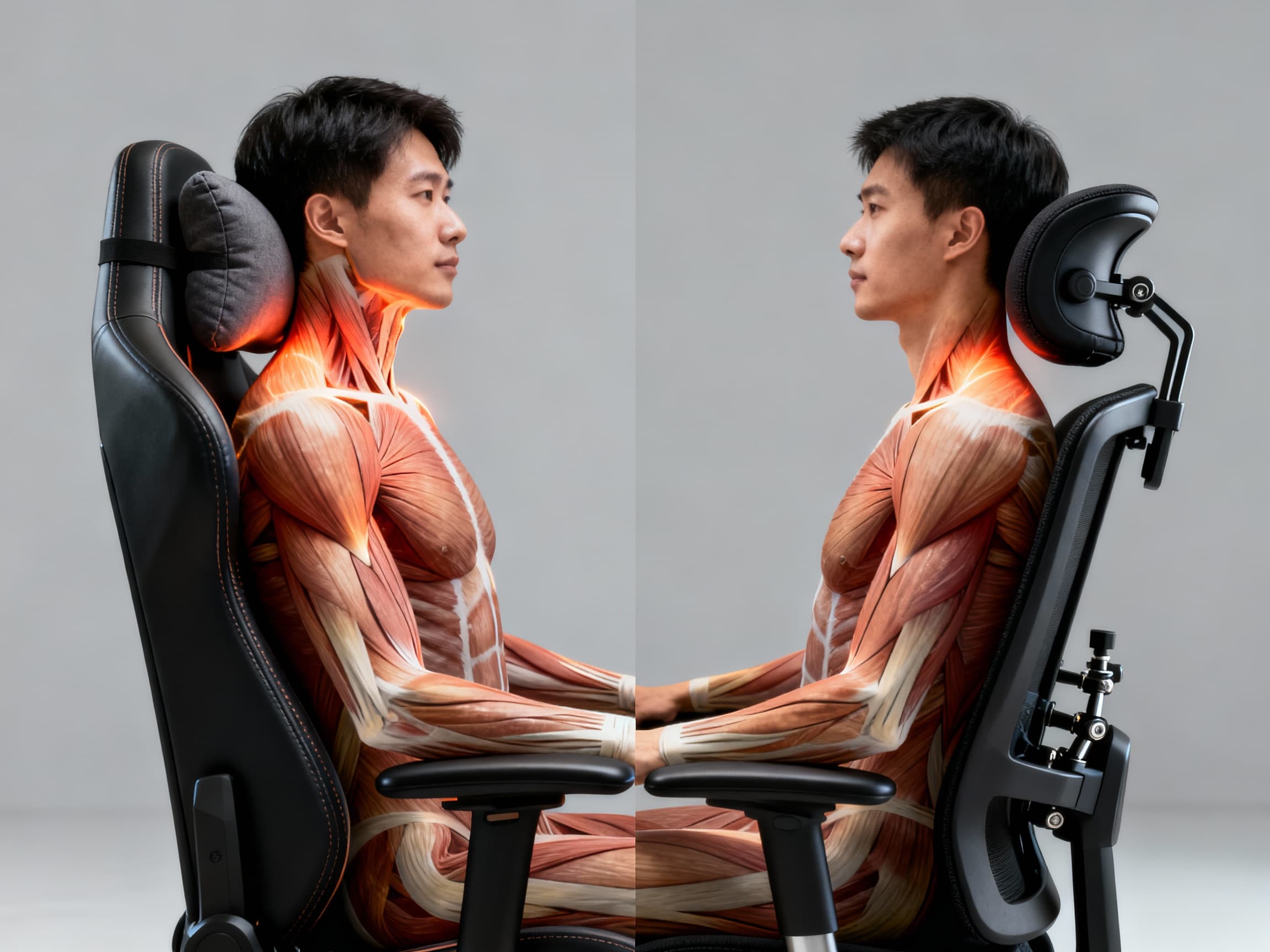
Most gaming chairs include a headrest pillow, which feels supportive at first. But real ergonomic chairs offer adjustable headrests that move naturally with your posture. Shoulder tension often comes from raised armrests and poor desk alignment. Ergonomic chairs typically provide multi-axis armrest adjustments (height, depth, angle), which significantly reduces neck and trapezius strain. This is one of the biggest hidden health benefits people underestimate.
- Recline, Movement & Active Sitting →
Gaming chairs often recline aggressively - sometimes up to 165-180 degrees. This feels great for relaxation, but not for productivity or posture endurance. Ergonomic chairs focus on dynamic sitting, allowing small recline movements while maintaining consistent lumbar support. This keeps your core muscles subtly engaged and prevents spine compression. It’s the difference between collapsing into a seat versus being supported by it.
- Material, Breathability & Heat Build-Up →
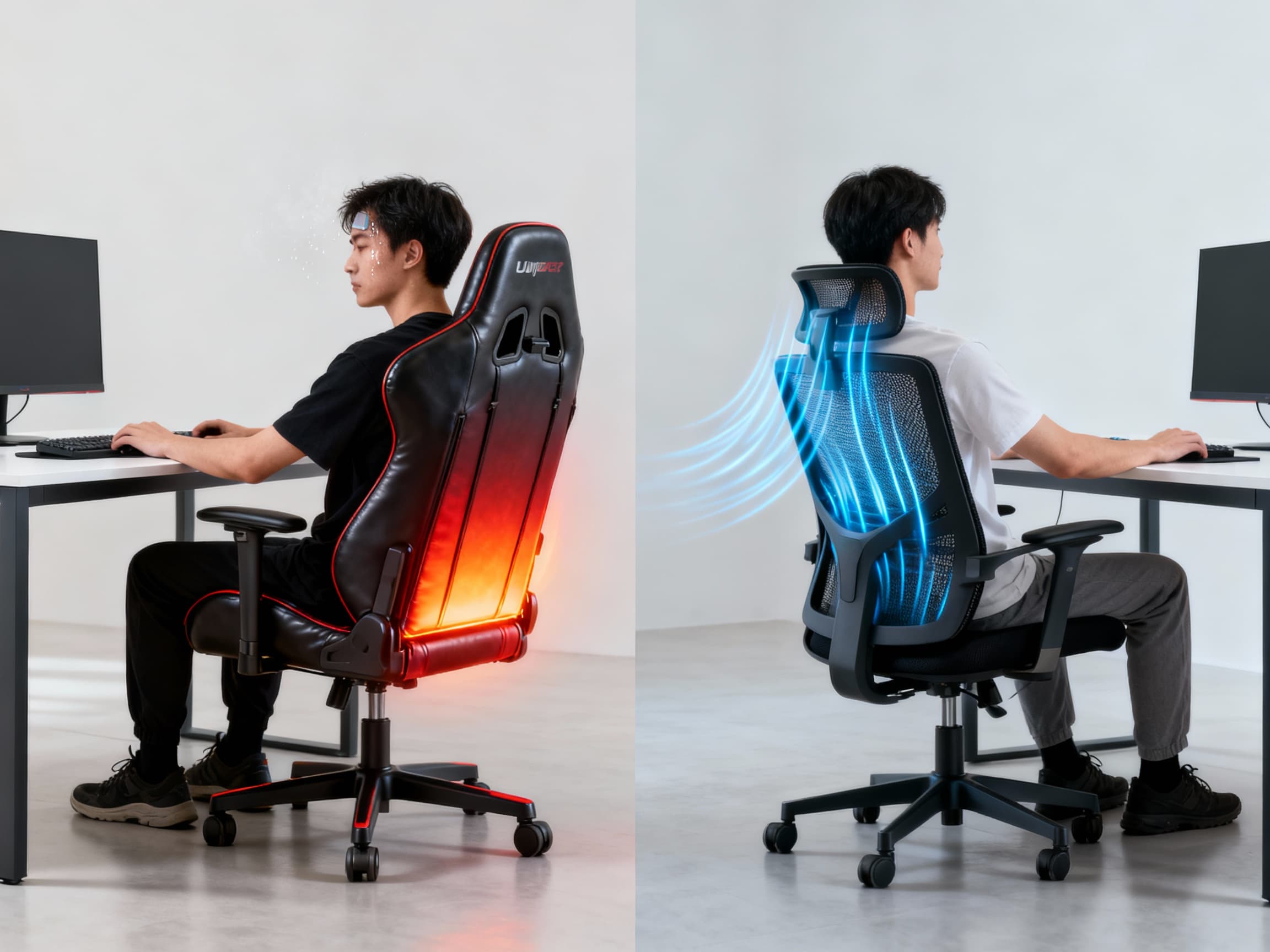
PU leather gaming chairs trap heat easily, especially in warm climates. After a few hours, sweating becomes uncomfortable and distracting. Ergonomic chairs usually use breathable mesh backs and ventilated cushions that keep your body cool. In countries with hot weather or long usage hours, breathability directly affects how long you can sit without discomfort.
- Adjustability & Body Customisation →
True ergonomics is all about adjustability: seat depth, lumbar tension, back tilt resistance, armrest positioning, and headrest movement. Most gaming chairs offer height, back tilt, and basic armrest adjustments - but rarely the fine customisation needed for different body types. A chair that adapts to your body will always outperform one that forces your body to adapt to it.
- Aesthetics, Branding & Emotional Appeal →
There’s no denying it - gaming chairs look cool. They match RGB setups, esports themes, and aggressive gaming aesthetics perfectly. They make your setup feel powerful and cinematic. Ergonomic chairs look professional, minimal, and corporate. One boosts visual excitement, the other blends into workspaces. Emotionally, gaming chairs feel exciting. Ergonomic chairs feel mature, calm, and purpose-driven.
- Health Risks: RSI, Disc Compression & Circulation →
Poor lumbar support, rigid posture, and thigh pressure increase the risk of disc compression, nerve irritation, and poor blood circulation. Ergonomic chairs actively reduce these risks. Many gaming chairs, especially budget models, worsen them over time. Health issues don’t appear in the first month - they show up after one or two years. The chair you choose today decides your physical comfort years later.
- Durability, Build Quality & Longevity →
High-quality ergonomic chairs are designed for office environments where they’re used 8-12 hours daily for many years. Their mechanisms, cylinders, and frames are built for endurance. Many gaming chairs focus more on looks than engineering precision. The result? Earlier sinking cushions, loose armrests, and noisy tilt mechanisms.
- Price vs Value in 2025 →
In 2025, budget gaming chairs still dominate the lower price range due to aesthetics and marketing. Ergonomic chairs cost more upfront but deliver significantly higher long-term value. A ₹15,000 ergonomic chair often outperforms a ₹20,000 gaming chair in health, durability, and comfort. Value is measured in pain avoided, not just money spent.
- Who Should Actually Buy a Gaming Chair? →
Choose a gaming chair if your sessions are short, your priority is aesthetics, you want to match your RGB battlestation, and comfort is more about feel than health. Casual gamers, students, and stream-focused setups benefit the most. But don’t expect medical-grade posture correction from stylistic designs.
- Who Should Actually Buy an Ergonomic Office Chair? →
Choose an ergonomic chair if you work long hours, suffer from back or neck pain, sit daily for 6+ hours, or care about long-term health over appearance. Content creators, developers, editors, and hybrid professionals benefit the most. If your chair is your daily companion - ergonomics becomes non-negotiable.
- Hybrid Work + Gaming Users (The Growing Majority) →
In 2026, most users are no longer just gamers or just office workers - they’re both. This is where ergonomic chairs shine. They maintain comfort during Zoom calls, editing sessions, spreadsheets, and then smoothly transition into long gaming nights without punishment the next morning.
- The Emotional Truth Behind the Purchase Decision →
Most people buy gaming chairs with excitement and ergonomic chairs with hesitation. But after two years, the emotion often flips. Those with ergonomic chairs feel grateful. Those with uncomfortable gaming chairs feel regret. The question isn’t “Which looks cooler?” - it’s “Which version of yourself do you want to protect?”
FAQs
Final Thoughts 💭
A chair isn’t just furniture - it’s the foundation of your daily performance, focus, and physical future. Gaming chairs sell excitement. Ergonomic chairs build sustainability. One feels powerful today. The other keeps you powerful tomorrow. In 2026, the smartest setups aren’t just built for frames per second - they’re built for years of pain-free sitting. Choose the chair that supports the life you plan to live at your desk. 🪑