How to Create the Perfect Night-Time Gaming Room Lighting Setup (2026 Guide 🌙🎮)
22 December 2025
Learn how to design the perfect night-time gaming room lighting setup without eye strain or distractions. This guide covers ambient lighting, bias lighting, color temperature, contrast balance, and mood creation for late-night gaming sessions.
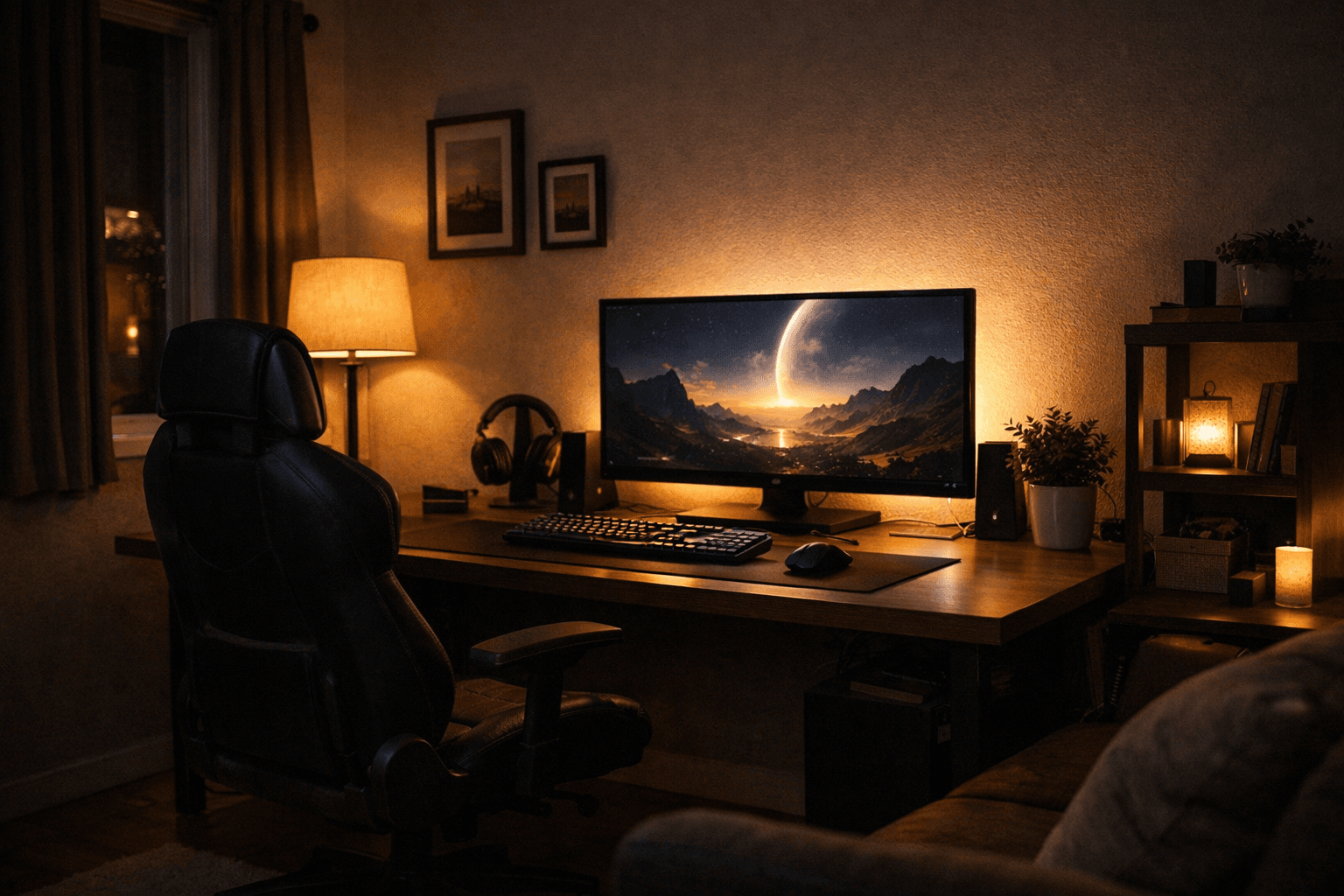
There’s something special about gaming at night. The world goes quiet, distractions fade, and it finally feels like it’s just you and the screen. But there’s also a problem most gamers ignore - harsh lighting, glowing screens in dark rooms, burning eyes, headaches, and that drained feeling after long sessions. A perfect night-time gaming room isn’t about blasting RGB everywhere or sitting in total darkness. It’s about balance. About lighting that supports your eyes, your focus, and your mood without breaking immersion. In this guide, we’ll walk through how to create a night-time gaming lighting setup that feels immersive, comfortable, and sustainable - so your late-night sessions feel calm instead of exhausting.
The Ultimate Guide to Night-Time Gaming Room Lighting 🌙✨
- Why Night-Time Lighting Matters More Than You Think →
At night, your eyes are far more sensitive to contrast and brightness changes. Sitting in a dark room with a bright screen forces your eyes to constantly adjust, which leads to fatigue, dryness, and headaches. Over time, this stress adds up. Good night-time lighting isn’t about brightness - it’s about reducing contrast, supporting natural vision, and letting your eyes relax while staying focused on the game.
- Never Game in Complete Darkness →
Gaming in total darkness might feel immersive at first, but it’s one of the biggest causes of eye strain. When your screen is the only light source, your pupils constantly expand and contract with every scene change. This overworks your eyes and causes discomfort. A softly lit room keeps your visual system stable and dramatically improves comfort during long night sessions.
- Understand Ambient Lighting vs Direct Lighting →
Direct lighting shines straight into your eyes or onto your desk, while ambient lighting softly fills the room. For night gaming, ambient lighting should always be the priority. Soft light around the room reduces harsh shadows and creates a calm visual environment. Direct lights should be minimal and carefully placed to avoid glare on your screen.
- Bias Lighting: The Secret to Eye Comfort →
Bias lighting is soft light placed behind your monitor or screen. It reduces the contrast between your bright display and the dark room, making it easier for your eyes to focus. This single change can instantly make gaming feel smoother and more comfortable. The goal is not brightness, but balance - your eyes should never feel shocked by the screen.
- Choose the Right Color Temperature for Night Gaming →
Cool blue light keeps your brain alert but can disrupt sleep and increase eye strain late at night. Warmer tones help your body relax without killing visibility. The best night-time gaming setups use neutral-to-warm lighting that supports focus without overstimulation. Your room should feel calm, not clinical.
- Avoid Harsh White and Over-Saturated Colors →
Pure white lighting and overly intense colors create visual noise at night. They reflect off walls, bounce into your eyes, and fight with your screen for attention. Softer, diffused colors blend into the background and maintain immersion. Your lighting should support the game - not compete with it.
- Balance Screen Brightness With Room Light →
A common mistake is lowering room lighting but keeping screen brightness too high. This imbalance causes eye strain faster than either extreme alone. Adjust your screen so it feels comfortable in the room’s lighting - not blinding, not dull. Your eyes should never feel like they’re being pulled toward the screen.
- Layer Your Lighting for Depth →
The best night-time gaming rooms don’t rely on a single light source. They use layers - soft background lighting, gentle wall illumination, and subtle desk glow. This creates depth and atmosphere while preventing harsh contrasts. Layered lighting makes your room feel larger, calmer, and more immersive.
- Use Walls and Surfaces to Diffuse Light →
Light bouncing off walls is far easier on the eyes than direct beams. Light-colored or matte walls help diffuse the glow evenly across the room. Avoid shiny surfaces near your monitor that reflect light directly back at you. Soft diffusion is what separates a cozy setup from a harsh one.
- Control Reflections and Screen Glare →
Reflections break immersion and strain your eyes. Position lights so they never appear directly in your screen’s reflection. Side lighting and rear lighting are far safer than front-facing sources. A glare-free screen lets your eyes stay relaxed and focused on gameplay.
- Lighting and Mood: Calm vs Competitive →
Your lighting should match how you play. Calm, story-driven games feel better in softer, warmer environments. Competitive sessions benefit from slightly brighter, neutral lighting that keeps you alert without stress. Adjusting lighting based on mood helps your brain transition naturally into the gaming experience.
- The Psychological Impact of Night Lighting →
Lighting affects emotion more than most people realise. Harsh light raises tension. Balanced lighting creates calm control. When your room feels visually comfortable, your reaction time improves and frustration drops. A peaceful lighting environment helps you stay composed even during intense moments.
- Avoid Visual Clutter at Night →
At night, the brain processes visual clutter more aggressively. Too many glowing points, blinking lights, or mixed colors pull attention away from the game. Simpler lighting feels more immersive and mentally relaxing. Less light, used intentionally, always beats more light used randomly.
- Adjust Lighting as the Night Goes On →
Your eyes change over time. What feels fine at 9 PM may feel harsh at 1 AM. Gradually softening lighting as the night progresses helps your body wind down naturally. This small adjustment reduces fatigue and makes late-night sessions feel smoother.
- Night-Time Lighting and Sleep Health →
Poor night lighting doesn’t just hurt your eyes - it disrupts sleep quality. Harsh blue-heavy lighting confuses your body’s sleep signals. A balanced setup allows you to game late without feeling wired when you finally shut down. Good lighting respects both your hobby and your recovery.
FAQs
Final Thoughts 💭
The perfect night-time gaming room isn’t loud or blinding - it’s intentional. It protects your eyes, calms your mind, and lets you stay immersed without punishment the next day. Lighting isn’t decoration; it’s part of your performance, your health, and your long-term enjoyment of gaming. When your room feels balanced, your sessions feel longer, smoother, and more satisfying. Build lighting that supports you - not one that fights your vision. 🌙🎮